
Pakistan Plans to Send 800,000 Workers Abroad in 2026
Pakistan plans to send 800,000 workers abroad in 2026 as part of a structured overseas employment strategy aimed at boosting remittances and reducing domestic unemployment. The government has increased its target for this year to meet the rising international labor demand, especially in GCC countries and East Asia. This initiative focuses on skilled and semi-skilled workers, aiming to improve workforce readiness through training and institutional reforms.
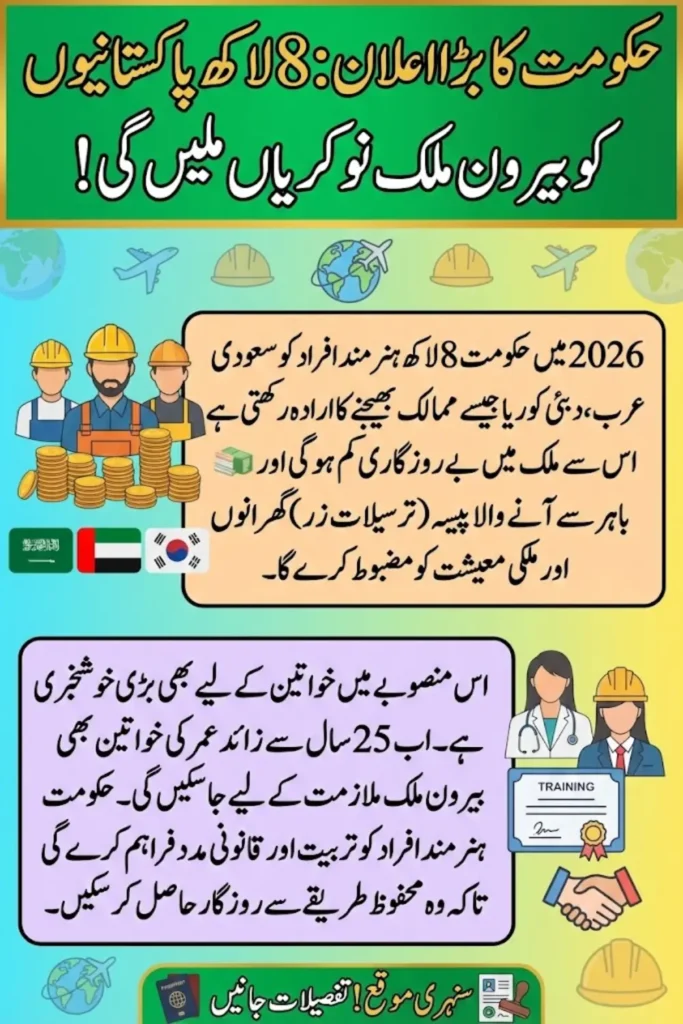
The program reflects a shift toward organized labor export, ensuring workers are deployed through official channels with proper documentation and protection. By strengthening oversight and skills, Pakistan aims to improve its global labor reputation and create sustainable income opportunities for families at home.
Key objectives of the 2026 plan include:
- Sending 800,000 workers abroad through legal channels
- Expanding access for skilled and semi-skilled labor
- Improving remittance inflows and economic stability
You Can Also Read: Dongfeng Vigo EV Launched in Pakistan: Price, Range, Features, and Booking Details
Growing Global Demand for Pakistani Workers
International demand for Pakistani workers is increasing, particularly in Saudi Arabia, the UAE, Qatar, South Korea, and Japan. These markets value trained manpower in construction, healthcare, manufacturing, and technical services. Pakistan is aligning its workforce supply with these needs through targeted training and partnerships.
Soft-skills and vocational programs are being introduced to help workers adapt to international work cultures. This preparation improves productivity and reduces job mismatch, making Pakistani workers more competitive abroad.
High-demand regions and sectors include:
- GCC countries for construction and services
- Korea and Japan for technical and industrial roles
- Healthcare and skilled trades worldwide
You Can Also Read: Dongfeng Vigo EV Launched in Pakistan: Price, Advance Features, and Booking Details
New Opportunities for Women in Overseas Employment
A major reform in 2026 is the expansion of overseas employment opportunities for women. The government has reduced the minimum age for female workers from 35 to 25 years, opening international job markets to younger women. This move supports gender inclusion and economic independence.
Women are expected to find opportunities in healthcare, caregiving, hospitality, and skilled services. These roles not only improve household income but also contribute to social empowerment and skill development.
Key reforms supporting women include:
- Reduced the minimum age requirement
- Access to skill and safety training
- Focus on gender-inclusive overseas sectors
You Can Also Read: Imperial College London Scholarship Announced for Pakistani Students: A Major Opportunity to Study
Economic Impact of Sending Workers Abroad
Overseas employment plays a vital role in Pakistan’s economy through remittances. Workers abroad send significant monthly income, supporting families and strengthening foreign exchange reserves. For example, Pakistani workers in Korea remit around $1,800 per month on average.
Increased remittances help stabilize the currency, support consumption, and encourage long-term economic growth. Returning workers also bring skills and experience that benefit local industries.
Economic benefits include:
- Higher foreign exchange inflows
- Improved household financial stability
- Skill transfer to local markets
Overseas Employment Targets and Support Measures
- Category Details
- Workers Targeted in 2026: 800,000
- Key Destination Regions: GCC, Korea, Japan
- Female Minimum Age 25 years
- Training Focus: Soft skills and technical skills
- Institutional Support EOBI, help desks, digital systems
You Can Also Read: Rs 750 Prize Bond Results January 2026 Announced: Winning Numbers, Prize Details, and Tax
Institutional Reforms and Worker Support
To support overseas workers, the government is reforming institutions like EOBI through digitization and improved complaint management. Help desks in major cities guide workers, employers, and pensioners. These reforms improve transparency and trust in the system.
Coordination with international partners and integration with government portals ensures smoother deployment and dispute resolution. This institutional backing protects worker rights and improves employment outcomes.
Support measures include:
- Digital complaint systems
- Help desks in major cities
- Mediation and worker protection mechanisms
You Can Also Read: Sehat Sahulat Program Extension Approved: Rs 40.18 Billion Allocated for AJK, GB, and ICT Until 2027
Conclusion
Pakistan’s plan to send 800,000 workers abroad in 2026 highlights a strong commitment to economic growth, workforce development, and gender inclusion. Through skill training, institutional reforms, and expanded opportunities for women, the initiative aims to maximize the benefits of overseas employment.
This structured approach not only improves remittances but also strengthens Pakistan’s global labor standing, ensuring long-term gains for workers and the national economy.
You Can Also Read: Shab e Meraj 2026 in Pakistan: Date, Story, Meaning, and Religious Importance
FAQs
How many workers will Pakistan send abroad in 2026?
Pakistan aims to deploy 800,000 workers abroad through official overseas employment channels.
Are women eligible for overseas employment in 2026?
Yes, women can apply, and the minimum age has been reduced to 25 years.
Which countries need Pakistani workers most?
GCC countries, South Korea, and Japan show strong demand for Pakistani labor.
How does overseas employment help Pakistan’s economy?
It increases remittances, strengthens foreign reserves, and supports household incomes.
You Can Also Read: Shab-e-Meraj 2026: Date, Meaning, and Spiritual Importance