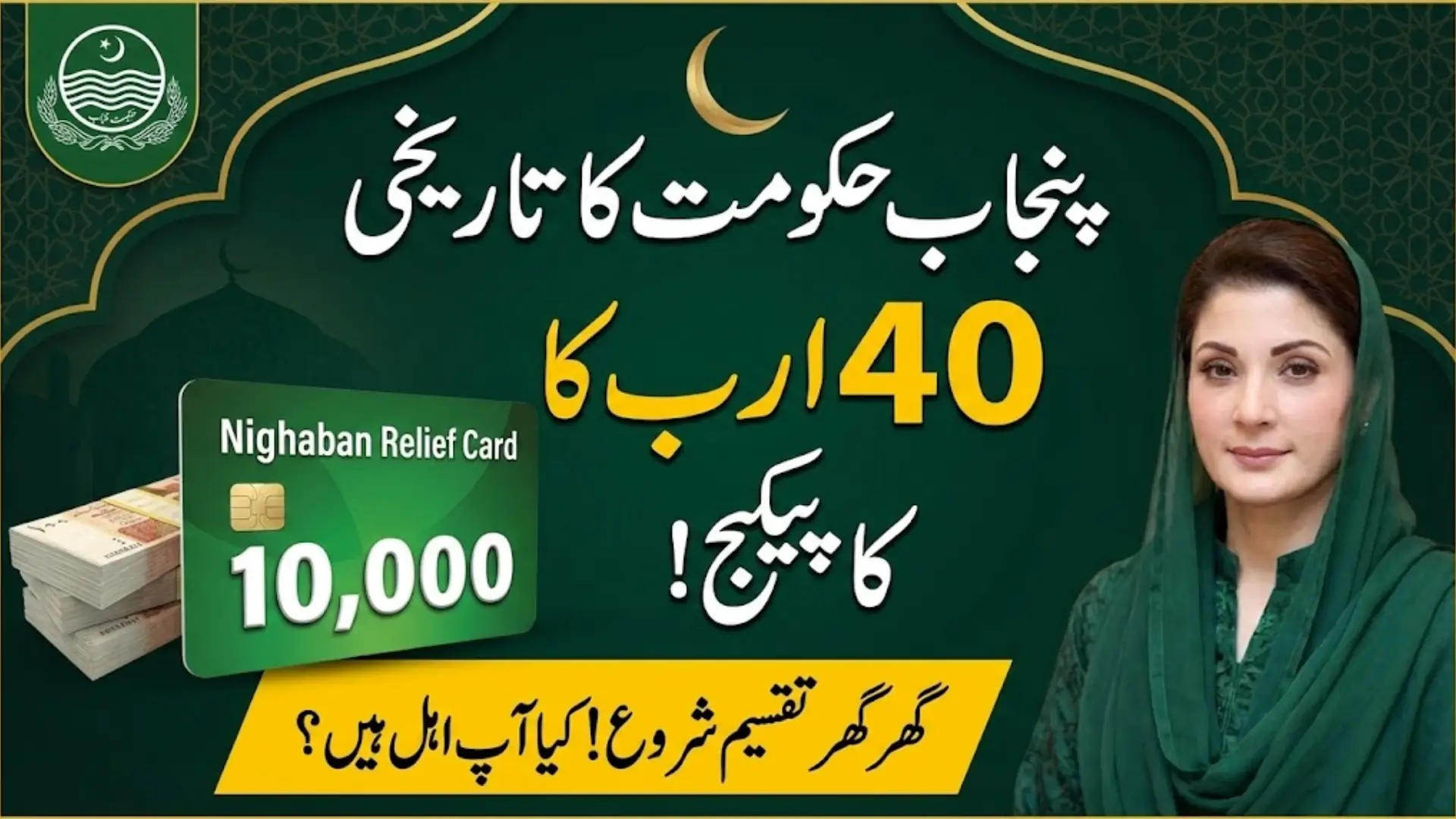
Rs 40 Billion Nighaban Ramadan Relief Program
The government of Punjab has introduced the Rs 40 Billion Nighaban Ramadan Relief program to reduce financial pressure on low-income families during Ramadan. With a total allocation of Rs 40 billion, this initiative stands among the largest Ramadan welfare efforts in the province. The program combines direct financial support, subsidized food access, and organized community meals to ensure households can manage essential expenses during the holy month.
Rising inflation and increased consumption during Ramadan often create additional financial stress for vulnerable families. Through this comprehensive welfare model, authorities aim to provide timely assistance while maintaining transparency and organized distribution. The program focuses on accessibility, dignity, and efficient service delivery across both urban and rural districts.
- Rs 40 billion allocated for Ramadan relief
- Province-wide coverage across districts
- Combination of financial aid and food subsidies
- Organized and transparent distribution mechanism
- Special focus on low-income and registered families
You Can Also Read: Instant Ramadan Relief 2026 – Complete Guide to Rs 10,000 Aid and Helpline 1000 Registration
Increased Financial Assistance Under Rs 40 Billion Nighaban Ramadan Relief
A major feature of the Rs 40 Billion Nighaban Ramadan Relief initiative is the increase in financial assistance for eligible households. Under the leadership of Maryam Nawaz, the Ramadan support amount has been raised from Rs 3,000 to Rs 10,000. This increase is designed to help families manage food purchases, kitchen expenses, and utility costs during the fasting month.
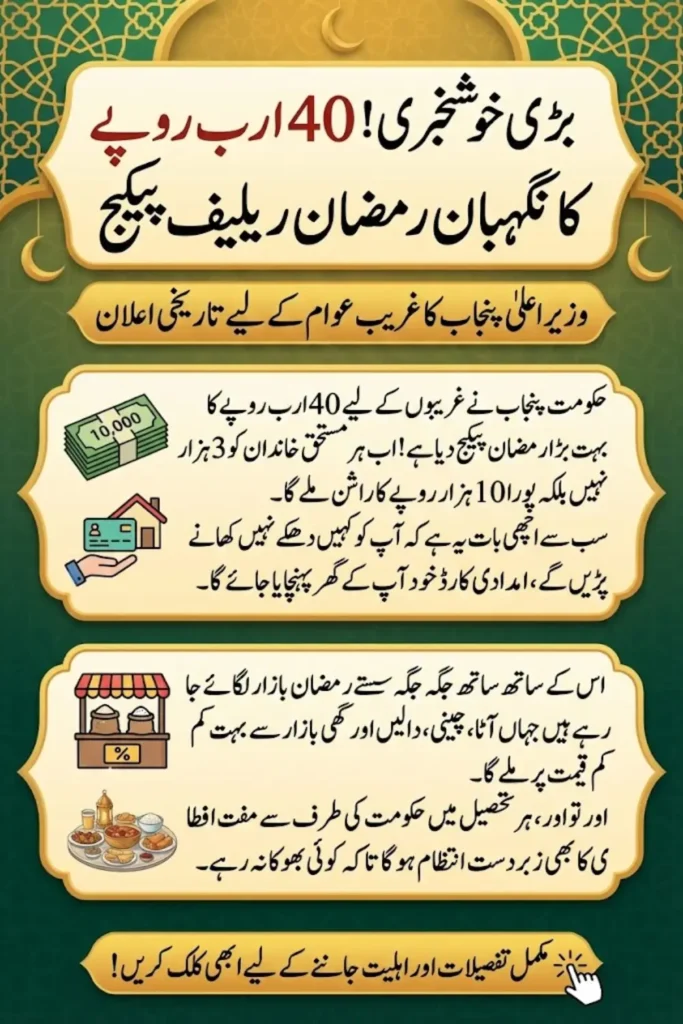
The financial support is distributed through designated relief cards issued to verified households. This structured system ensures that funds reach deserving beneficiaries through proper channels. By targeting registered families, the program strengthens transparency and prevents misuse of public resources.
| Feature | Previous Support | Current Support |
|---|---|---|
| Ramadan Financial Assistance | Rs 3,000 | Rs 10,000 |
| Distribution Method | Limited support channels | Verified relief card system |
| Target Beneficiaries | Selected families | Registered low-income households |
- Rs 10,000 assistance per eligible family
- Distribution through structured relief cards
- Focus on verified low-income households
- Improved transparency in financial transfers
- Support tailored to rising commodity prices
You Can Also Read: Tiggo 9 Plug-in Hybrid Launched in Pakistan – Premium E-SUV Price, Features, and Performance
Doorstep Delivery System Improves Accessibility
The Rs 40 Billion Nighaban Ramadan Relief program introduces a home delivery system for relief cards. Instead of requiring beneficiaries to travel to distribution centers, local administrative teams deliver assistance directly to households. This reduces transportation barriers and prevents overcrowding at public offices.
This citizen-centered approach ensures equal access for elderly individuals, women, and families living in remote areas. By simplifying the process, authorities aim to improve efficiency and make welfare services more convenient for beneficiaries.
- Direct delivery of relief cards to homes
- Reduced travel and waiting time
- Improved access for remote communities
- Coordinated district-level administrative support
- Efficient and organized distribution system
You Can Also Read: Punjab Class 9 and 10 Date Sheet 2026 Announced – Complete Exam Schedule
Subsidized Ramadan Markets Provide Essential Commodities
To control rising food costs, special Ramadan markets have been established under the Rs 40 Billion Nighaban Ramadan Relief initiative. These markets offer essential food items at discounted prices compared to open market rates. Families can purchase daily necessities within their limited budgets, ensuring stable food access throughout Ramadan.
Items such as flour, sugar, pulses, and cooking oil are available at regulated prices. The structured market setup ensures price transparency and consistent supply. Local administration supervises operations to prevent artificial inflation and ensure fair pricing for citizens.
| Commodity | Availability | Pricing Structure |
|---|---|---|
| Flour | Widely available | Subsidized rate |
| Sugar | Controlled supply | Discounted price |
| Pulses | Regular stock | Regulated pricing |
| Cooking Oil | Monitored distribution | Reduced cost |
- Discounted essential food items
- Organized markets across districts
- Price monitoring to prevent inflation
- Consistent supply of daily necessities
- Support for millions of citizens
You Can Also Read: Islamabad Free Public WiFi Project Delayed Despite Completion Deadline
Community Iftar Arrangements Strengthen Social Support
In addition to financial and food assistance, the Rs 40 Billion Nighaban Ramadan Relief program includes organized community Iftar arrangements at the tehsil level. These daily meal services are designed for individuals who may not have adequate food for breaking their fast. The meals are provided in a respectful and organized environment.
Community participation and coordination with local administration ensure smooth meal distribution. This initiative reflects the spirit of social solidarity during Ramadan, allowing vulnerable individuals to observe the fast with dignity and inclusion.
- Free daily Iftar meals at tehsil level
- Organized and supervised meal distribution
- Inclusive environment for vulnerable citizens
- Large-scale participation across districts
- Strengthening community welfare traditions
You Can Also Read: Memory Chip Shortage Raises PC Prices as Lenovo Warns of Extended Supply Pressure Through 2026
Province-Wide Impact of Rs 40 Billion Nighaban Ramadan Relief
The combined approach of financial aid, subsidized markets, and community meals creates a balanced welfare framework. Direct cash assistance supports household budgets, while food subsidies help maintain stable access to essential commodities. This integrated model addresses both income limitations and consumption needs during Ramadan.
By implementing structured administrative coordination across districts, the government aims to strengthen public trust in welfare programs. The initiative not only reduces immediate financial stress but also reflects a broader commitment to organized social protection.
- Reduction in financial burden for families
- Balanced support through cash and food security
- Strengthened public trust through transparency
- Province-wide coverage across urban and rural areas
- Comprehensive Ramadan welfare framework
You Can Also Read: Punjab Ramadan School Timings 2026 Announced for Single and Double Shift Schools
FAQs
What is the Rs 40 Billion Nighaban Ramadan Relief program?
It is a province-wide welfare initiative providing financial aid, subsidized food, and community meals during Ramadan.
How much financial assistance is provided under the program?
Eligible households receive Rs 10,000 through a verified relief card system.
How are relief cards distributed?
Relief cards are delivered directly to beneficiaries’ homes by local administrative teams.
What items are available in subsidized Ramadan markets?
Essential commodities such as flour, sugar, pulses, and cooking oil are offered at discounted prices.
You Can Also Read: NEPRA Net Metering Policy 2026 Retains Protection for Existing Solar Consumers