Government Increases Petroleum Levy on Petrol and Diesel in 2026
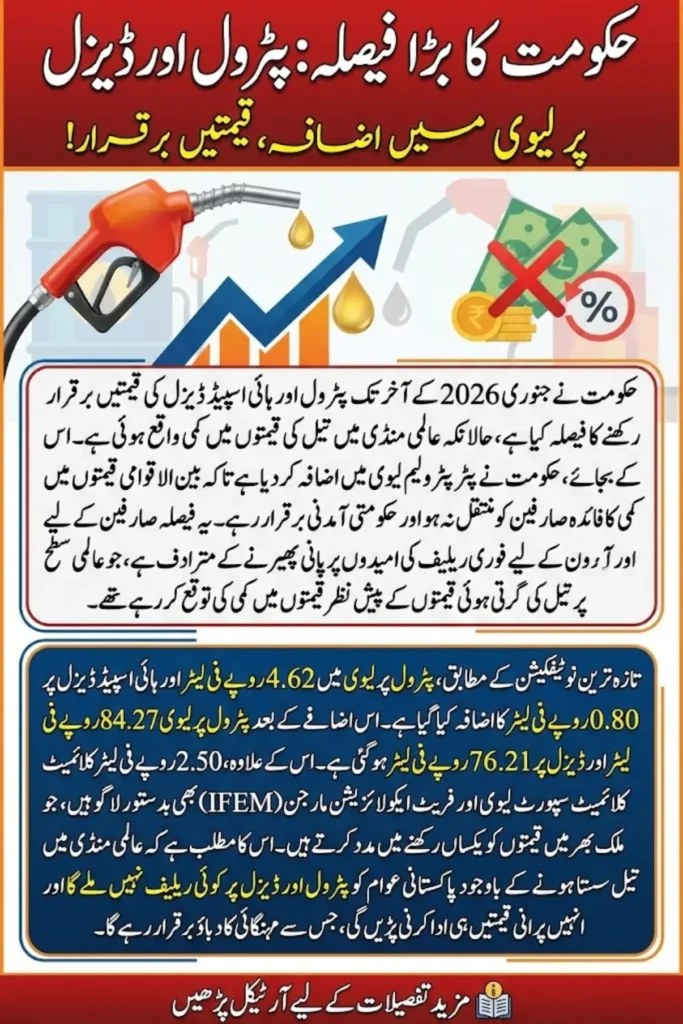
The federal government has increased the petroleum levy on petrol and high-speed diesel while keeping fuel prices unchanged until the end of January 2026. This decision comes despite a visible decline in global oil prices, which many consumers expected would translate into relief at fuel stations. Instead, the government has adjusted levy rates to absorb the impact of international price reductions.
From a policy perspective, this move reflects a revenue-focused approach. By increasing the levy, the government ensures a steady income stream without changing retail prices. While this helps manage fiscal requirements, it also means consumers continue to pay the same fuel prices even when global conditions suggest possible reductions.
Key points behind the decision include:
- Fuel prices frozen despite falling global oil rates
- Petroleum levy adjusted to maintain government revenue
- No immediate relief for consumers and transporters
You Can Also Read: Turkish Scholarships 2026: A Complete Guide to the Application Process and Eligibility Criteria
Details of the Petroleum Levy Increase
The latest notification confirms that the petroleum levy on petrol has been increased by Rs. 4.62 per litre, while high-speed diesel has seen a smaller hike of Rs. 0.80 per litre. High Octane Blending Component has also faced an increase equal to petrol, aligning levy rates across premium fuels.
These adjustments prevent any downward revision in fuel prices. Instead of passing on international savings to consumers, the government has chosen to retain prices and strengthen its revenue base. This approach highlights the reliance on petroleum levies as a key fiscal tool.
Summary of levy changes:
- Petrol levy increased to Rs. 84.27 per litre
- HSD levy raised to Rs. 76.21 per litre
- HOBC levy aligned with petrol at Rs. 84.27
You Can Also Read: 8171 Benazir Income Support Programme 2026: Step-by-Step Registration and Eligibility Guide
Updated Petroleum Levy Structure for January 2026
The revised levy structure combines multiple charges that collectively determine the final fuel price. Along with the petroleum levy, consumers continue to pay climate-related and freight equalization charges that keep prices stable nationwide.
The following table explains the current levy and charge structure applied to major fuels:
| Fuel Type | Petroleum Levy (Rs/L) | Climate Support Levy (Rs/L) | IFEM (Rs/L) |
|---|---|---|---|
| Petrol | 84.27 | 2.50 | 8.97 |
| High-Speed Diesel | 76.21 | 2.50 | 7.25 |
| HOBC | 84.27 | 2.50 | Included |
This structure ensures uniform pricing while safeguarding government revenue.
You Can Also Read: Dongfeng Vigo EV Launched in Pakistan: Price, Range, Features, and Booking Details
Climate Support Levy and Additional Charges
Apart from the petroleum levy, a Climate Support Levy of Rs. 2.50 per litre continues to apply on petrol, diesel, and HOBC. This charge is aimed at supporting climate and environmental initiatives while contributing to the overall fuel pricing framework.
Other fuel types, such as kerosene oil and light diesel oil, also remain subject to levy taxation. These additional charges ensure consistency across fuel categories and prevent price imbalances in the energy market.
Additional charges include:
- CSis L applied uniformly on major fuels
- Levy on kerosene oil and LDis O maintained
- Environmental fundinis g supported through fuel pricing
You Can Also Read: Dongfeng Vigo EV Launched in Pakistan: Price, Advance Features, and Booking Details
Inland Freight Equalization Margin Explained
The Inland Freight Equalization Margin plays a crucial role in ensuring uniform fuel prices across Pakistan. Whether fuel is sold in a remote area or a major city, IFEM helps balance transportation and distribution costs for oil companies.
Currently, IFEM is set at Rs. 8.97 per litre for petrol and Rs. 7.25 per litre for high-speed diesel. While it supports nationwide price equality, it also adds a fixed cost that consumers must bear regardless of location.
Functions of IFEM include:
- Equalizing fuel prices across regions
- Covering transportation and logistics costs
- Ensurina g consistent fuel supply nationwide
You Can Also Read: Imperial College London Scholarship Announced for Pakistani Students: A Major Opportunity to Study
Impact on Consumers and Transporters
Although global oil prices have declined, the increased petroleum levy prevents any reduction in local fuel prices. As a result, households continue to face unchanged fuel expenses, affecting monthly budgets and daily commuting costs.
Transporters and businesses are also impacted, as fuel remains a major operational expense. These costs are often passed on to consumers through higher prices of goods and services, creating indirect inflationary pressure.
Main impacts include:
- No fuel price relief for consumers
- Higher operating costs for the transport sector
- Potential rise in commodity prices
You Can Also Read: Rs 750 Prize Bond Results January 2026 Announced: Winning Numbers, Prize Details, and Tax
Government Revenue and Market Stability
From the government’s standpoint, petroleum levies provide a reliable source of revenue. By adjusting levies instead of prices, authorities can protect fiscal targets while maintaining stability in the domestic fuel market.
However, this approach raises concerns about long-term affordability. While short-term stability is achieved, continued reliance on fuel levies may increase the financial burden on consumers if global prices fluctuate further.
Key Highlights of the Petroleum Levy Policy
The following table summarizes the main highlights of the current petroleum levy decision:
| Aspect | Status January 2026 |
|---|---|
| Fuel Prices | Unchanged |
| Petroleum Levy | Increased |
| Climate Support Levy | Continues at Rs. 2.50/L |
| IFEM | Applied nationwide |
| Consumer Relief | None in the current cycle |
This snapshot shows how multiple components work together to keep prices steady.
You Can Also Read: Sehat Sahulat Program Extension Approved: Rs 40.18 Billion Allocated for AJK, GB, and ICT Until 2027
Conclusion
The government’s decision to increase the petroleum levy on petrol and diesel while keeping prices unchanged reflects a focus on revenue stability over immediate consumer relief. Despite falling global oil prices, domestic fuel rates remain steady due to higher levies and additional charges.
For consumers and businesses, this means continued pressure on fuel-related expenses. Understanding the components of fuel pricing can help citizens better anticipate future changes and plan their budgets accordingly.
You Can Also Read: Shab e Meraj 2026 in Pakistan: Date, Story, Meaning, and Religious Importance
FAQs
Why did the government increase the petroleum levy in 2026?
The levy was increased to maintain government revenue despite falling international oil pricesHave
Are petrol and diesel prices reduced after the levy increase?
No, fuel prices remain unchanged until the end of January 2026.
What is the current petroleum levy on petrol?
The petroleum levy on petrol now stands at Rs. 84.27 per litre.
Does the Climate Support Levy still apply?
Yes, a Climate Support Levy of Rs. 2.50 per litre continues on major fuels.
What role does IFEM play in fuel pricing?
IFEM ensures uniform fuel prices across Pakistan by balancing transportation costs.
You Can Also Read: Shab-e-Meraj 2026: Date, Meaning, and Spiritual Importance