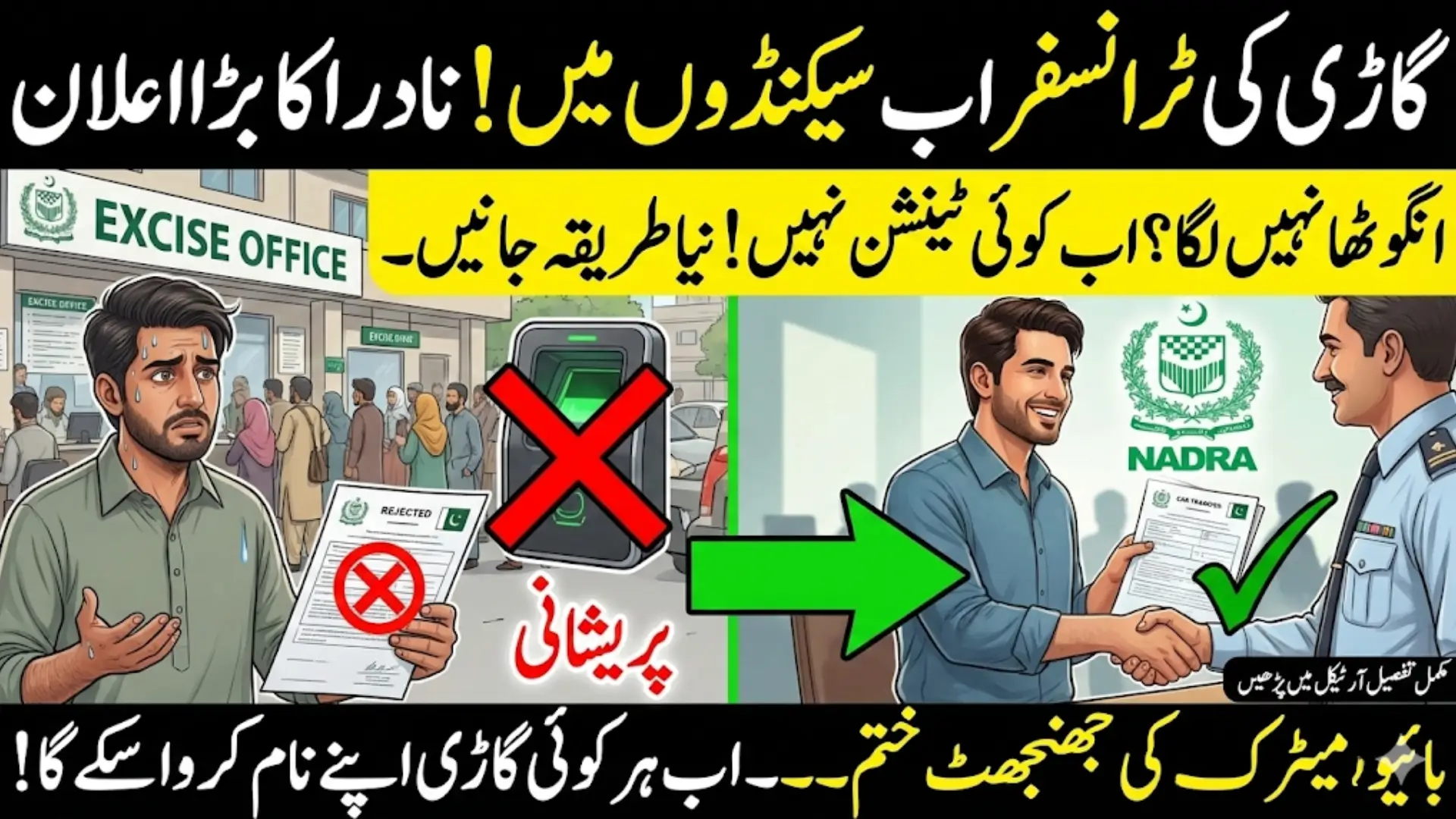
NADRA Simplifies Biometric Verification for Vehicle Transfers
NADRA simplifies biometric verification for vehicle transfers to address long-standing issues faced by car and motorcycle owners across Pakistan. For years, vehicle ownership transfer remained a stressful process due to biometric mismatches, repeated visits to excise offices, and unnecessary delays. Even genuine buyers and sellers often faced rejection because of minor fingerprint issues.
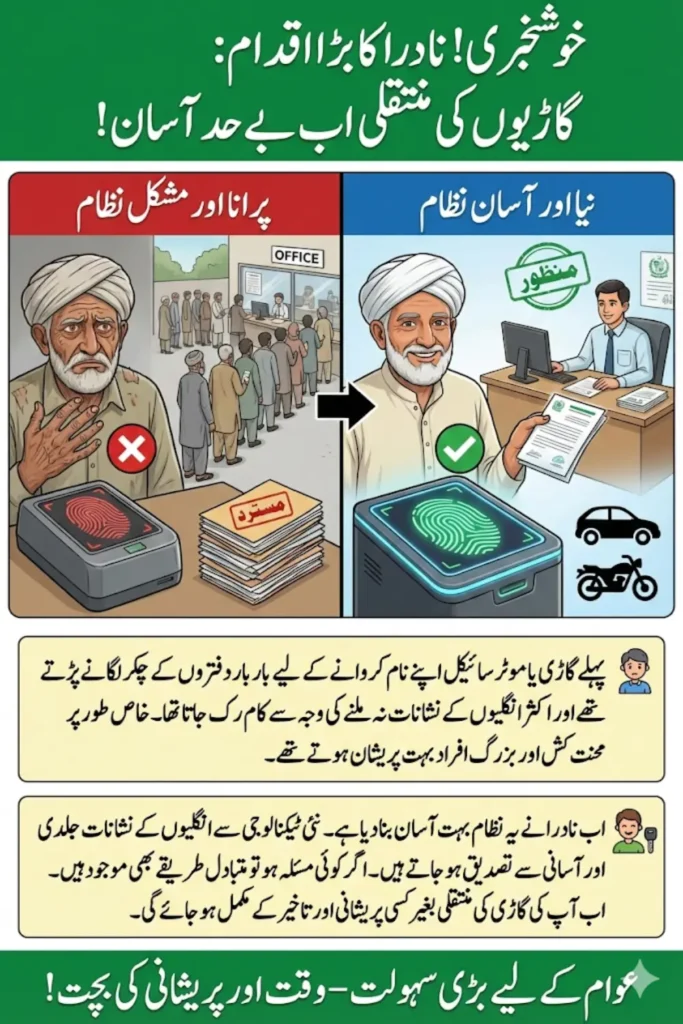
To improve public convenience and system reliability, NADRA introduced a revised biometric verification process. The update focuses on reducing failures while maintaining security, ensuring that vehicle transfers are completed smoothly without compromising legal safeguards.
- Faster and simpler verification process
- Reduced rejection due to fingerprint issues
- Better coordination with excise departments
You Can Also Read: JAECOO J5 HEV Pakistan Confirmed: Hybrid SUV with Advanced Features
What Has Changed in NADRA’s Biometric Verification System
The updated system aims to minimize dependency on a single fingerprint scan, which was a major cause of delays in the past. NADRA has improved fingerprint matching accuracy and introduced flexibility for cases where biometric data is difficult to verify.
These changes are designed to support genuine vehicle transfers while preventing misuse. Improved digital coordination ensures that ownership transfers are verified and approved without unnecessary manual intervention.
- Improved fingerprint matching technology
- Alternative verification methods introduced
- Enhanced data sharing with the excise authorities
You Can Also Read: 5G Rollout in Pakistan Raises Affordability Concerns as Telecom Operators
Why NADRA Simplified Biometric Verification for Vehicle Transfers
One major reason for the update was frequent biometric failure experienced by many citizens. Manual labor, aging, finger injuries, and outdated NADRA records often resulted in fingerprint mismatches, stopping legitimate transfers for weeks.
Another concern was the rise in vehicle fraud. Criminals exploited weaknesses in the system to carry out fake transfers. The revised process balances convenience with security, ensuring genuine users are facilitated while fraudulent activity is reduced.
- Worn or faded fingerprints
- Public complaints about delays
- Increase in illegal vehicle transfers
You Can Also Read: Rawalpindi School Timing Changes 2026
How the New NADRA Biometric Verification System Works
Under the new process, both buyer and seller visit an excise office or authorized service center. Their CNICs are verified through the NADRA database, followed by biometric verification using upgraded scanners. If verification is successful, the transfer is approved digitally.
In cases where fingerprints fail, alternative options are evaluated instead of immediate rejection. This approach significantly reduces repeat visits and speeds up the overall process.
- CNIC verification through NADRA
- Biometric scan using improved devices
- Digital approval of ownership transfer
| Step | Description |
|---|---|
| CNIC Check | Identity verified through NADRA |
| Biometric Scan | Multiple fingers allowed |
| Approval | Digital transfer confirmation |
Alternative Verification Options and Beneficiaries
For individuals whose fingerprints cannot be verified, NADRA allows multiple finger attempts, thumb-index combinations, and biometric record updates before transfer. Supervised verification may also be used in special cases.
This system benefits private vehicle owners, used car buyers, dealers, and government departments. Reduced workload and fewer disputes improve efficiency across the board.
- Multiple biometric attempts allowed
- Special consideration for elderly and labor workers
- Faster processing for dealers and offices
You Can Also Read: 5G Rollout in Pakistan Raises Affordability Concerns as Telecom Operators Urge Caution
Key Advantages of the Simplified Biometric Verification
The most visible benefit is faster vehicle transfers. What previously took weeks can now be completed in much less time. Reduced visits lower stress and save money for citizens. Improved security ensures accurate linkage between CNICs and vehicles. Better data synchronization enhances record accuracy and limits fraud.
- Shorter processing time
- Lower stress for citizens
- Improved digital record accuracy
| Advantage | Impact |
|---|---|
| Faster Transfers | Less waiting and delays |
| Better Security | Reduced fraud cases |
| Digital Accuracy | Cleaner ownership records |
Vehicle Transfer Requirements Under the New System
To complete a vehicle transfer, original CNICs of both buyer and seller are required along with the registration book or smart card. Token tax must be cleared and the vehicle must not be blacklisted.
- Valid CNICs
- Registration documents
- Cleared dues and taxes
You Can Also Read: JAECOO J5 HEV Pakistan Confirmed: Hybrid SUV with Advanced Features Coming Soon
FAQs
What if biometric verification still fails?
Alternative verification methods or NADRA record updates may be used under supervision.
Who benefits the most from this update?
Private vehicle owners, used car buyers, dealers, and excise departments.
Does the new system reduce fraud?
Yes, improved verification and data coordination help prevent fake transfers.
Is fingerprint updating required before transfer?
Only if existing NADRA records are outdated or mismatched.
Final Thoughts
The move that NADRA simplifies biometric verification for vehicle transfers is a major step toward citizen-friendly governance. By reducing delays while maintaining security, the system improves trust in vehicle ownership records. For buyers and sellers, this update means smoother transfers, fewer complications, and greater confidence in legal ownership across Pakistan.
You Can Also Read: Samsung Galaxy S26 Price Outlook: Faces Rising Costs, But US Prices Unchanged for Now