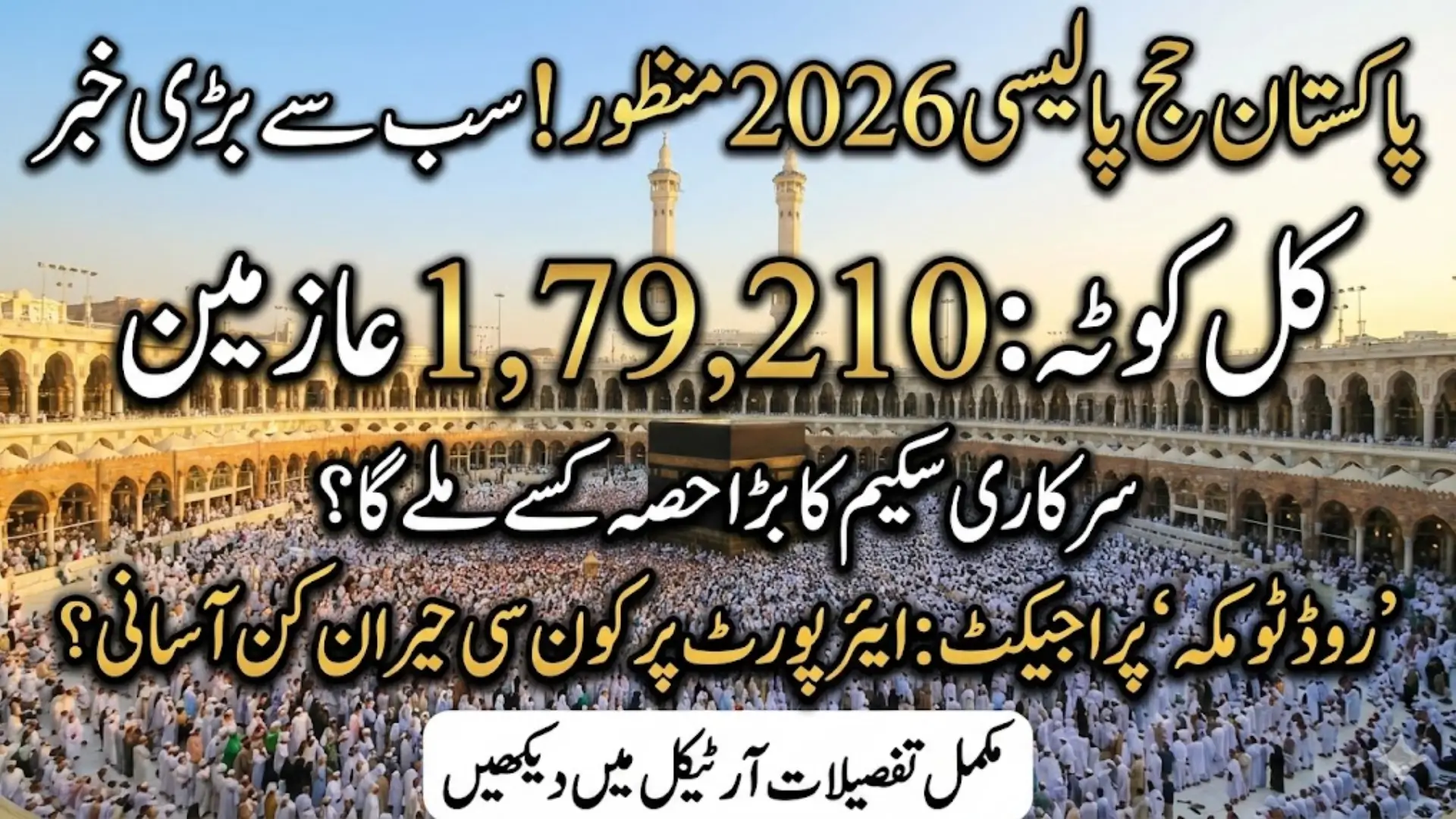
Pakistan Hajj Policy 2026 Approved with 179,210 Pilgrim Quota
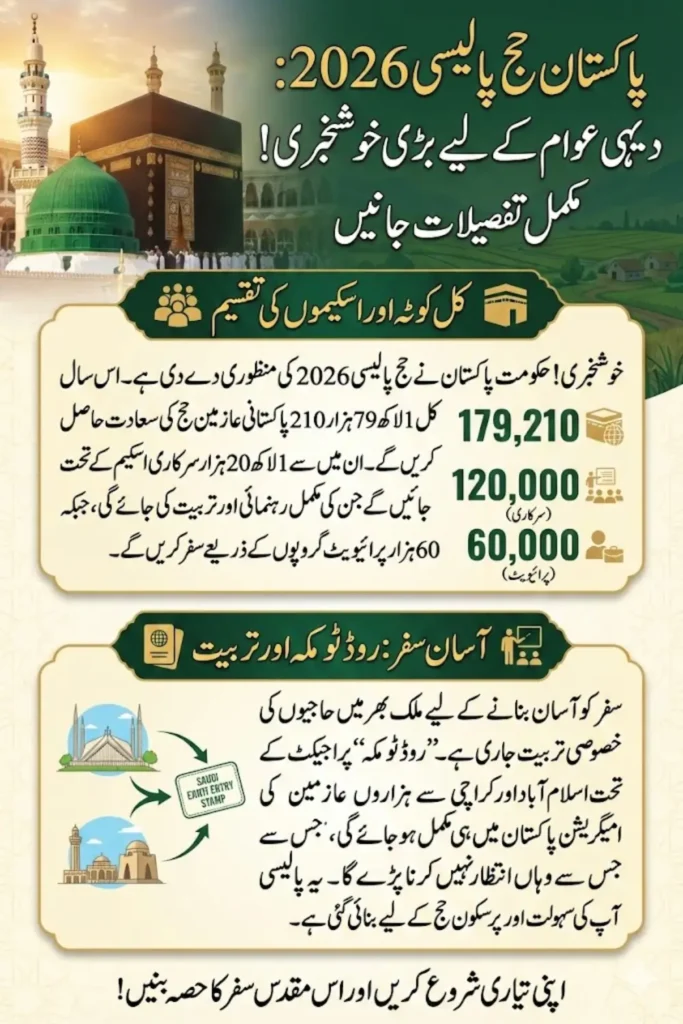
Pakistan has officially approved its Hajj Policy 2026 in accordance with guidelines issued by Saudi Arabia. The government’s announcement ensures that the annual pilgrimage is organized smoothly, with clear allocations for both government and private schemes. Federal Minister for Religious Affairs and Interfaith Harmony Sardar Muhammad Yousaf confirmed that the total quota for Pakistani pilgrims stands at 179,210 for 2026.
The approval of Pakistan’s Hajj Policy 2026 reflects the country’s commitment to facilitating the pilgrimage while maintaining coordination with Saudi authorities. By defining clear procedures and quotas, the government aims to ensure a safe, organized, and spiritually fulfilling journey for all pilgrims.
- Total Hajj quota for Pakistan: 179,210 pilgrims
- Policy aligned with Saudi Arabia guidelines
- Quotas split between government and private schemes
You Can Also Read: Imam Masjid Wazifa Apply Online 2026 Who Can Apply and Get PDF Registration Form
Pilgrim Quota and Allocation Under Pakistan Hajj Policy 2026
Under the approved Hajj policy, approximately 120,000 pilgrims will travel under the government scheme, while around 60,000 pilgrims will perform Hajj through private operators. This clear division is designed to streamline the pilgrimage process and prevent overcrowding at key facilities.
The allocation also allows the authorities to manage accommodations, transport, and other essential arrangements efficiently. By separating government and private pilgrims, the policy ensures that all participants receive proper guidance and support throughout the journey.
- Government scheme pilgrims: 120,000
- Private operators: 60,000 pilgrims
- Efficient allocation ensures smooth management
You Can Also Read: Suzuki Alto 2026 vs Cultus 2026: Prices, Performance, and Best Choice for City Driving
Hajj Training Program for 2026 Pilgrims
The Ministry of Religious Affairs has initiated Hajj training for 2026 across the country. These mandatory training sessions prepare pilgrims for their journey, including guidance on rituals, health precautions, and travel procedures.
Training sessions are being conducted in various districts to ensure that every pilgrim understands the process and performs their religious duties correctly. This initiative is part of Pakistan’s Hajj Policy 2026’s broader goal to improve the overall experience and safety of pilgrims.
- Nationwide training sessions ongoing
- Mandatory for all pilgrims under the government scheme
- Focus on rituals, health, and travel preparation
You Can Also Read: Maruti Suzuki Brezza 2026 Prices in India Revealed – Variant-Wise Rates and Key Details
Road to Makkah Project: Pre-Departure Immigration
Under Pakistan’s Hajj Policy 2026, about 38,000 pilgrims from Islamabad will benefit from the Road to Makkah project. This facility allows pilgrims to complete Saudi immigration procedures in Pakistan before departure, reducing wait times upon arrival in the holy cities.
Currently, the Road to Makkah project is operational in Islamabad and Karachi, but the government plans to extend it to Lahore. The initiative ensures smoother travel logistics and helps pilgrims focus on their spiritual journey rather than administrative formalities.
- 38,000 pilgrims from Islamabad are under the project
- Facility currently in Islamabad and Karachi
- Expansion planned for Lahore
You Can Also Read: Suzuki Cultus 2026 Prices in Pakistan Revealed – Variant-Wise Rates and Key Details
Support for Religious Minorities and Interfaith Harmony
Sardar Muhammad Yousaf emphasized that the Ministry of Religious Affairs promotes interfaith harmony and supports minority communities. The government provides scholarships to children from minority groups, financial assistance to deserving individuals, and funds for the rehabilitation of worship places.
Minorities also benefit from reserved job quotas and representation in parliament. Pakistan Hajj Policy 2026 complements these broader initiatives by ensuring inclusive religious practices and opportunities for all communities.
- Scholarships and financial assistance for minorities
- Job quotas and parliamentary representation
- Rehabilitation of worship places
You Can Also Read: 8171 Benazir Income Support Programme 2026: Step-by-Step Registration and Eligibility Guide
Centralized System for Zaireen Pilgrimages
The Ministry has introduced a new centralized system to organize pilgrimages for Zaireen traveling to holy sites in Iran and Iraq. This system streamlines registration, travel arrangements, and coordination, making religious trips more organized and efficient.
By implementing a centralized approach, the government aims to enhance convenience for participants and ensure better management of pilgrimages. The system also allows authorities to monitor the process effectively and address any issues promptly.
- Centralized system for Zaireen trips
- Simplifies registration and travel arrangements
- Enhances monitoring and coordination
You Can Also Read: Pakistan’s IsDB Financing Agreements Worth $603 Million Signed for Motorway, Poverty Reduction
Pilgrim Quota Summary Table
| Scheme | Number of Pilgrims | Key Features |
|---|---|---|
| Government Hajj Scheme | 120,000 | Mandatory training and support |
| Private Hajj Operators | 60,000 | Managed by approved agencies |
| Road to Makkah Project | 38,000 | Pre-departure immigration in Pakistan |
FAQs
What is the total Hajj quota for Pakistan in 2026?
The total quota for Pakistani pilgrims in 2026 is 179,210, divided between government and private schemes.
How many pilgrims will travel under the government scheme?
Approximately 120,000 pilgrims will perform Hajj under the government scheme.
What is the Road to Makkah project?
It allows pilgrims to complete Saudi immigration procedures in Pakistan before departure, currently available in Islamabad and Karachi.
Are minority communities supported under this policy?
Yes, the government provides scholarships, financial assistance, job quotas, and rehabilitation of worship places for minorities.
Is Hajj training mandatory for pilgrims?
Yes, mandatory training is conducted nationwide to prepare pilgrims for rituals, health, and travel procedures.
You Can Also Read: Sindh Grading System Reform Approved as Marks-Based Exams Abolished for Matric and Intermediate