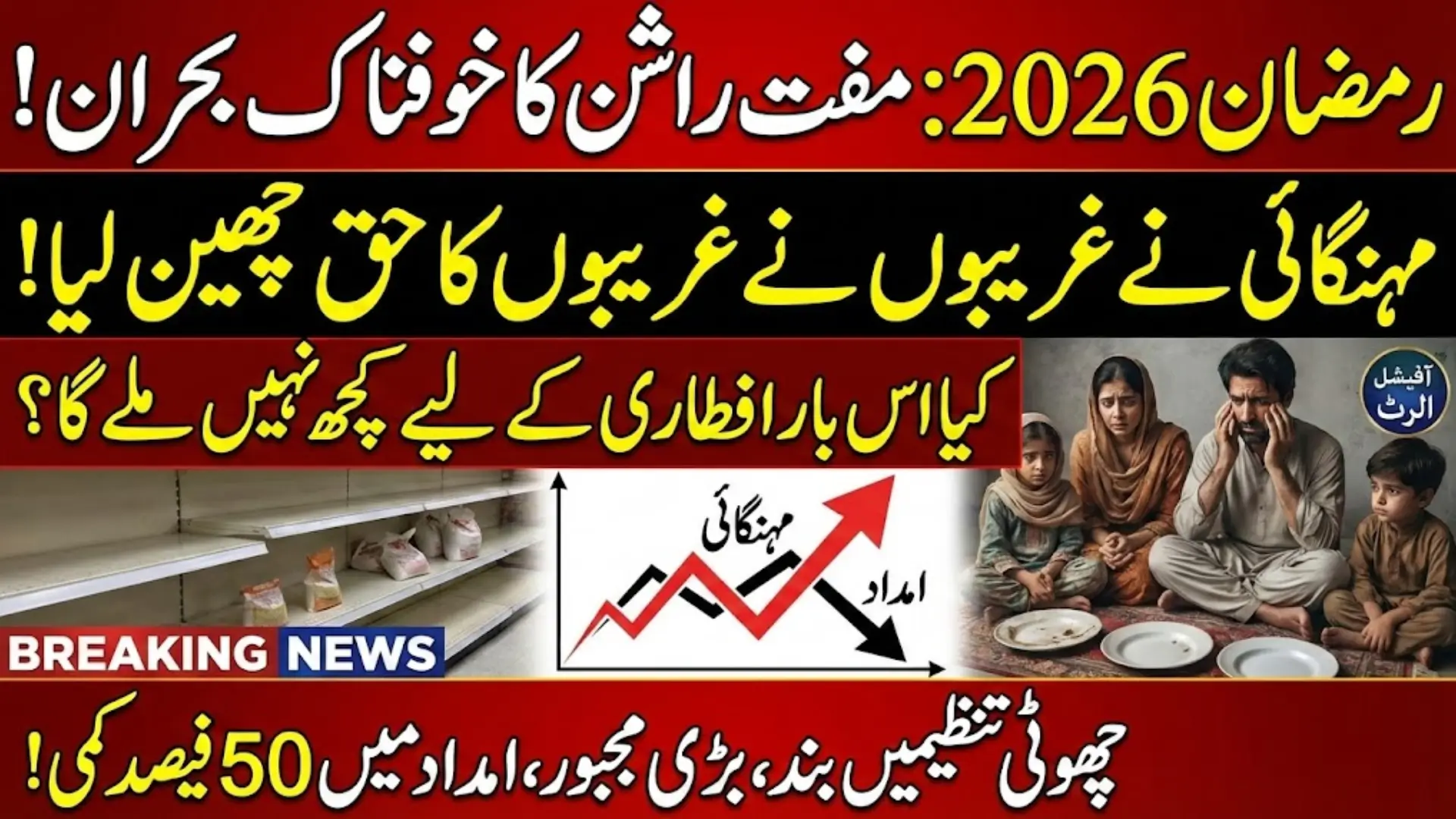
Introduction to Ramadan Free Ration Distribution Decline in 2026
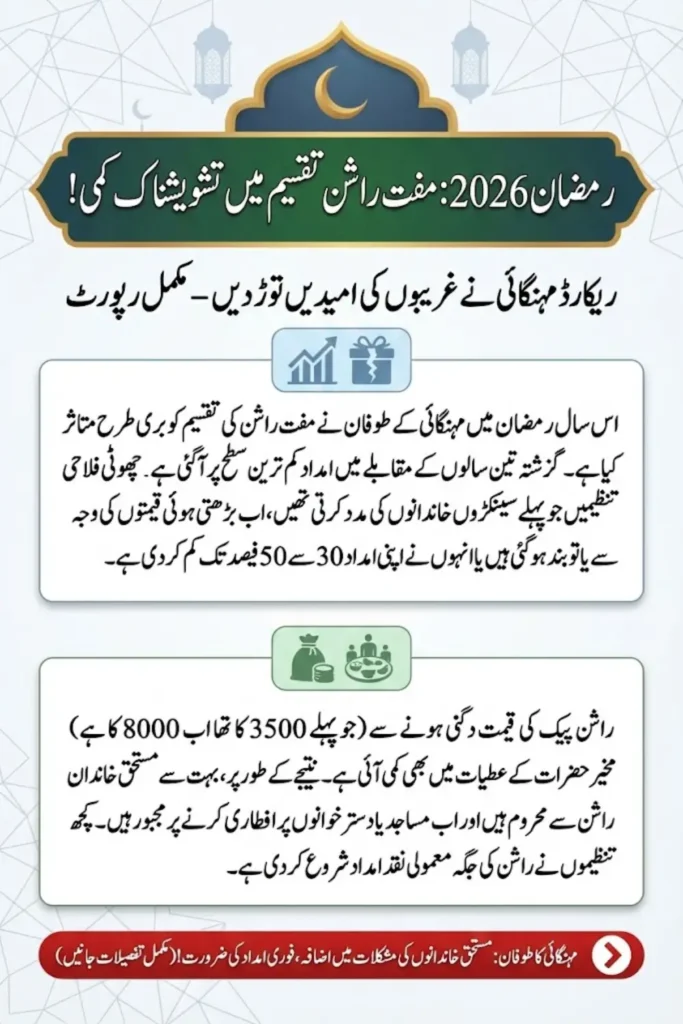
The Ramadan Free Ration Distribution Decline has become a serious concern at the start of Ramadan 2026. Compared to the past three years, free ration support for deserving families has dropped to its lowest level. Many small social organizations that regularly distributed ration packs every Ramadan have either stopped their programs or significantly reduced their outreach due to record inflation.
Ramadan is a time when charitable giving increases, and thousands of families depend on free ration packs to manage food expenses. However, rising prices of essential commodities have forced small NGOs to cut support by 30 to 50 percent. This decline has directly affected low-income households that rely on community donations for survival during the holy month.
- Free ration distribution has reached a three-year low.
- Small city-based NGOs have reduced aid by 30–50 percent.
- Many groups that supported 200–300 families now help only around 100.
- Some organizations have completely halted operations.
You Can Also Read: Nighaban Program How to Verify Your Eligibility Using CNIC Through Official Helpline
Impact of Record Inflation on Ramadan Gift Packs
Record inflation is the main reason behind the Ramadan Free Ration Distribution Decline. According to social welfare representatives, a Ramadan gift pack that previously cost between Rs3,000 and Rs3,500 now costs Rs7,000 to Rs8,000. This sharp increase has doubled the financial burden on charitable organizations.
Essential items such as pulses, gram flour, cooking oil, flour, and dates have reached record-high prices. Even common grocery items have become expensive, making it difficult for NGOs to prepare standard ration packages. As a result, the quantity of items included in gift packs has also been reduced.
| Item Category | Previous Average Cost | Current Average Cost |
|---|---|---|
| Ramadan Gift Pack | Rs3,000 – Rs3,500 | Rs7,000 – Rs8,000 |
| Large Juice Bottle | Around Rs400–500 | Around Rs800 |
- Prices of pulses and flour have surged sharply.
- Cooking oil and gram flour are at record highs.
- Gift pack costs have more than doubled.
- NGOs cannot maintain previous distribution levels.
You Can Also Read: Punjab School Timings During Ramadan 2026 Schedule Announced for All Schools
Decline in Donations and Funding Challenges
Despite rising costs, donations have not increased. In fact, contributions from wealthy donors have declined, further worsening the Ramadan Free Ration Distribution Decline. Smaller NGOs that once supported around 100 families have completely withdrawn from ration distribution because they cannot manage higher expenses.
Even larger organizations and individual donors have reduced both the number of beneficiaries and the quantity of items in each pack. Some goods are now limited to half or one kilogram instead of full packages. This adjustment reflects the financial pressure faced by charity networks across cities.
- Donations from wealthy individuals have decreased.
- Smaller NGOs have stopped ration programs entirely.
- Larger groups reduced the number of beneficiaries.
- Quantity of items in packs has been cut significantly.
You Can Also Read: Ramadan Mubarak 2026 Calendar in Pakistan – Complete Sehri, Iftar Timings
Shift from Ration Packs to Cash Assistance
Due to rising food prices, some organizations have changed their strategy. Instead of preparing full Ramadan gift packs, they distributed Rs2,000 cash envelopes to deserving families. This shift is a direct result of the Ramadan Free Ration Distribution Decline and the inability to afford traditional ration kits.
Cash assistance allows families to purchase items according to their needs. Government-supplied subsidized flour was also excluded from gift packs because of quality concerns. While cash support provides flexibility, it may not fully replace the value of a complete ration package.
| Support Type | Previous Practice | Current Practice |
|---|---|---|
| Ramadan Assistance | Full ration gift packs | Rs2,000 cash envelopes |
| Subsidized Flour | Included in packs | Excluded due to quality |
- Rs2,000 cash envelopes distributed this year.
- Traditional ration packs reduced or discontinued.
- Subsidized flour removed due to quality issues.
- Families now manage purchases independently.
You Can Also Read: Millat Tractors Limited Half-Yearly Results FY26 Show 20 Percent YoY Profit Decline
Role of Major Organizations in Ration Distribution
While small NGOs struggle, larger networks such as Jamaat-e-Islami and its subsidiary organizations continue to play a prominent role in ration distribution. Their established donation systems and broader support base allow them to maintain operations despite inflation.
However, even major organizations have adjusted their outreach by reducing quantities or limiting beneficiaries. The Ramadan Free Ration Distribution Decline is therefore not limited to small groups; it reflects a wider economic challenge affecting all charity sectors.
- Major organizations continue ration distribution.
- Established networks manage funding more effectively.
- Outreach numbers are still reduced compared to previous years.
- Inflation impacts both small and large charities.
You Can Also Read: 8070 Webportal Registration – Complete Guide for Online Eligibility Check
Difficulties Faced by Deserving Families
The Ramadan Free Ration Distribution Decline has placed additional pressure on deserving families. Many women have faced difficulties while searching for free rations across cities. Some areas that previously received annual support saw no distribution this year.
For example, in certain localities where free ration was distributed regularly, fewer families received help last year, and this year the program did not take place at all. As assistance decreases, vulnerable households are forced to explore alternative options to meet their basic food needs.
- Women struggle to secure ration support.
- Some communities received no distribution this year.
- Beneficiary numbers have dropped significantly.
- Food insecurity has increased during Ramadan.
You Can Also Read: Punjab Boards Extend HSSC 1st Annual Examinations Admission Schedule
Growing Dependence on Mosques and Dastarkhwans
With the Ramadan Free Ration Distribution Decline, more citizens have decided to break their fast at mosques and free dastarkhwans. These community iftar arrangements are becoming increasingly important for low-income individuals.
Free dastarkhwans provide daily iftar meals and reduce the burden on families who cannot afford full grocery supplies. However, growing dependence on public iftar services highlights the economic stress many households are experiencing this Ramadan.
- Increase in people attending mosque iftars.
- Expansion of free dastarkhwan services.
- Families relying on community meals instead of home cooking.
- Economic hardship driving higher demand for free food.
You Can Also Read: 9999 PM Ramzan Package 2026 – CNIC Check, Online Registration
Conclusion: Future Outlook of Ramadan Free Ration Distribution
The Ramadan Free Ration Distribution Decline in 2026 clearly shows how record inflation has reshaped charitable efforts. Small NGOs are struggling to survive, while larger organizations are adjusting their strategies to manage rising costs. The increase in food prices has reduced both the number of beneficiaries and the quantity of distributed items.
If inflation continues at current levels, the future of Ramadan ration programs may remain uncertain. Stronger donation support, transparent distribution systems, and sustainable funding models are essential to ensure that deserving families receive adequate assistance in the coming years.
You Can Also Read: 8123 Ehsaas Rashan Program 2026 – Complete Guide to Online Registration
FAQs
Why has Ramadan free ration distribution declined in 2026?
Record inflation and rising food prices have increased the cost of gift packs. Donations have not increased accordingly, forcing NGOs to reduce or stop distribution.
How much has the cost of a Ramadan gift pack increased?
Earlier it cost around Rs3,000 to Rs3,500. Now the same pack costs between Rs7,000 and Rs8,000.
Why are some organizations giving cash instead of ration packs?
Cash assistance of Rs2,000 is more affordable for NGOs. It also allows families to purchase items based on their immediate needs.
Are large organizations still distributing free rations?
Yes, major organizations continue distribution. However, they have reduced the number of beneficiaries and item quantities due to inflation.
You Can Also Read: 8070 vs 9999 Code Difference – Complete Guide to Ramzan Relief SMS Services 2026