KP Sehat Card Plus Programme
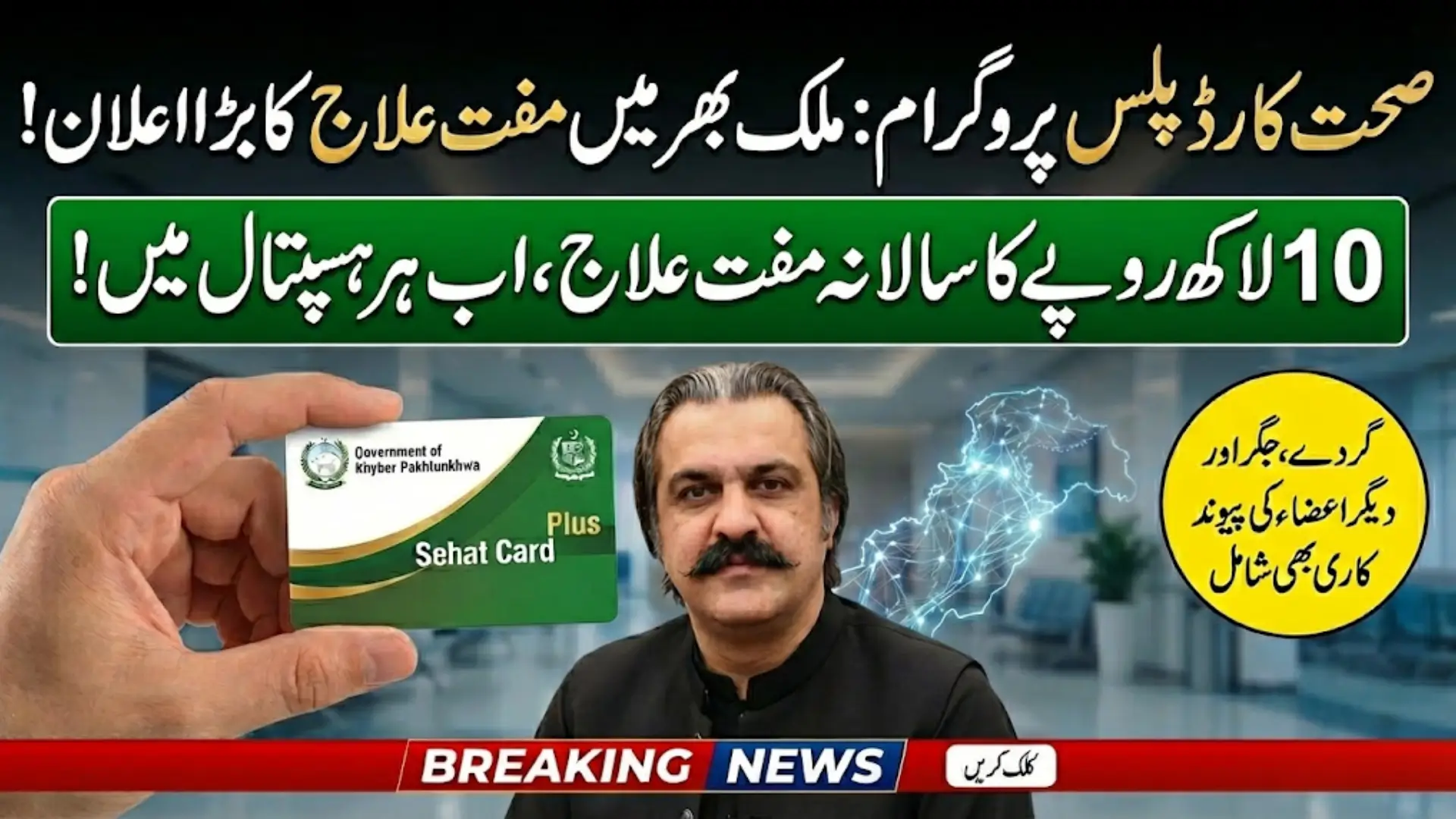
The KP Sehat Card Plus Programme is a flagship health insurance initiative launched by the Khyber Pakhtunkhwa government in 2016 to ensure free and dignified healthcare for citizens. The Programme was designed to remove financial barriers to medical treatment by offering cashless healthcare services to eligible families using their CNICs.
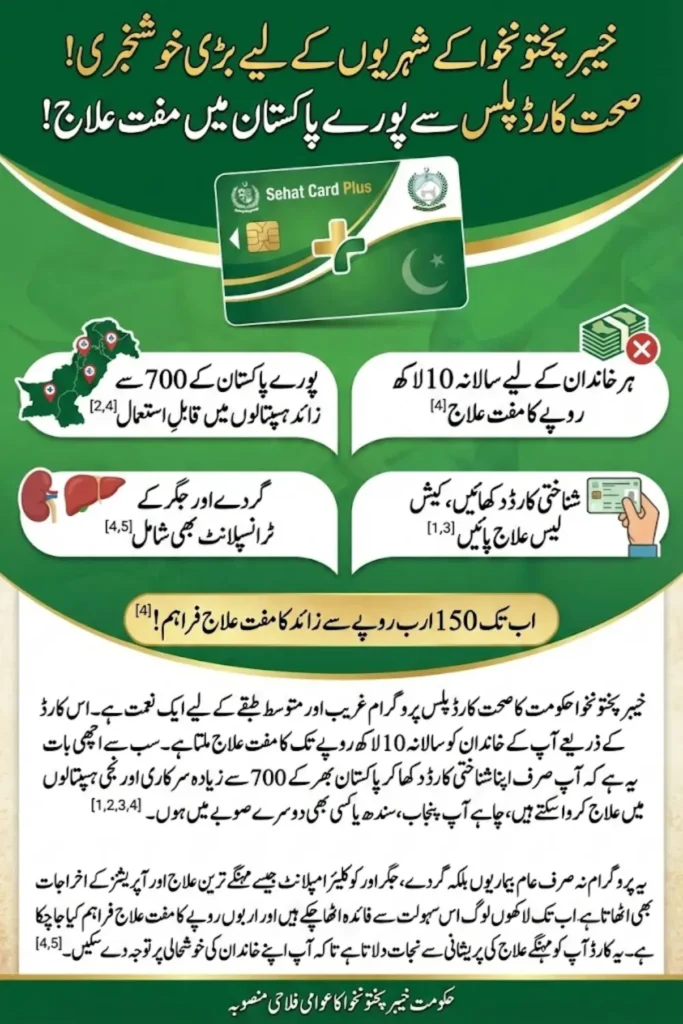
Over the years, the Sehat Card Plus Programme has evolved into one of Pakistan’s largest public health coverage schemes. It now allows residents of Khyber Pakhtunkhwa to receive treatment not only within the province but also anywhere in Pakistan through an extensive network of empaneled hospitals.
Key objectives of the Programme include
- Providing universal health coverage to KP residents
- Reducing out-of-pocket medical expenses
- Ensuring access to quality healthcare nationwide
Nationwide Access to Cashless Healthcare
One of the most important features of the Sehat Card Plus Programme is its nationwide usability. Patients can receive free medical treatment and diagnostic services at more than 700 empaneled hospitals across Pakistan without paying upfront costs.
| Category | Details |
|---|---|
| Programme Name | Sehat Card Plus Programme |
| Launch Year | 2016 |
| Province | Khyber Pakhtunkhwa |
| Total Beneficiaries | Over 5 million people |
| Families Covered | 11 million families |
| Annual Coverage Limit | Rs. 1 million per family |
| Total Treatment Value | Rs. 150 billion |
| Empaneled Hospitals | 700+ across Pakistan |
| Out-of-Province Patients | 294,287 |
| Main Treatment Cities | Punjab, Islamabad, Karachi, Balochistan |
| Payments to Outside KP Hospitals | Rs. 1.229 billion |
| Cashless Treatment | Yes (CNIC-based) |
| Organ Transplants Covered | Renal, Liver, Cochlear |
| Total Transplants Performed | 386+ procedures |
| Valid Across Pakistan | Yes |
This system is especially helpful for families living outside Khyber Pakhtunkhwa for work or education. By simply presenting a KP-issued CNIC, beneficiaries can access treatment in major cities without facing administrative hurdles.
Benefits of nationwide access include
- Cashless admission and treatment
- Coverage in both public and private hospitals
- No restriction on treatment location within Pakistan
Beneficiaries and Financial Coverage Since Launch
According to official records, more than five million people have benefited from the Sehat Card Plus Programme since its launch. The total value of treatments provided under the scheme has exceeded Rs. 150 billion, reflecting the scale and impact of the initiative.
The Programme currently covers 11 million families, offering each family free medical treatment of up to Rs. 1 million per year. This extensive financial coverage has significantly reduced the burden of healthcare expenses on low- and middle-income households.
| Programme Indicator | Details |
|---|---|
| Launch Year | 2016 |
| Total Beneficiaries | Over 5 million |
| Total Treatment Cost | Rs. 150 billion |
| Families Covered | 11 million |
| Annual Coverage Limit | Rs. 1 million per family |
Treatment Outside Khyber Pakhtunkhwa
Official data shows that around 294,287 KP residents have received medical treatment outside the province under the Sehat Card Plus Programme. Punjab emerged as the most common destination, followed by Islamabad, Karachi, and Balochistan.
Many beneficiaries sought treatment outside KP due to the availability of specialized hospitals and advanced medical facilities. In some cases, patients were residing outside the province, making local access impractical.
Common reasons for out-of-province treatment include
- Specialized procedures not available locally
- Employment-based residence in other provinces
- Referral to advanced healthcare centers
Payments to Hospitals Outside the Province
To support uninterrupted healthcare services, the KP government directly paid hospitals outside the province for treatments provided under the Sehat Card Plus Programme. The total amount paid for out-of-province treatments reached Rs. 1.229 billion.
This transparent payment mechanism ensures hospitals remain willing participants in the Programme. It also strengthens trust between healthcare providers and the provincial government, enabling patients to receive timely care without delays.
| Treatment Location | Payment Amount |
|---|---|
| Outside KP Hospitals | Rs. 1.229 billion |
| Total Out-of-Province Patients | 294,287 |
Coverage of Organ Transplants and Specialized Care
The Sehat Card Plus Programme also covers high-cost and life-saving procedures, including organ transplants. These services are often unaffordable for average families but are fully covered under the scheme.
According to health department officials, hundreds of patients have already benefited from transplant procedures, significantly improving survival rates and quality of life for critically ill individuals.
Transplants covered under the Programme include
- Renal transplants
- Liver transplants
- Cochlear implants
Impact on Public Health and Social Welfare
The Sehat Card Plus Programme has played a vital role in improving public health outcomes in Khyber Pakhtunkhwa. By ensuring free access to healthcare, the scheme has encouraged early diagnosis and timely treatment of serious illnesses.
Beyond medical benefits, the Programme has strengthened social protection by offering peace of mind to families. Knowing that major health expenses are covered allows households to focus on education, employment, and overall well-being.
FAQs
Who is eligible for the Sehat Card Plus Programme?
All permanent residents of Khyber Pakhtunkhwa with a valid CNIC are eligible for coverage under the Programme.
Can treatment be availed outside Khyber Pakhtunkhwa?
Yes, beneficiaries can receive cashless treatment at empaneled hospitals anywhere in Pakistan.
What is the annual treatment limit per family?
Each family is entitled to free medical treatment worth up to Rs. 1 million per year.
Are organ transplants covered under the scheme?
Yes, renal, liver, and cochlear transplants are included in the Sehat Card Plus coverage.
How many hospitals are part of the Sehat Card Plus network?
More than 700 public and private hospitals across Pakistan are empaneled under the Programme.